
The NRGD of The Netherlands Register for Court Experts stands as a solid and trusted institution in a forensic landscape undergoing rapid transformation. This message was powerfully underlined during the symposium held on Wednesday 8 October 2025, marking the NRGD’s 15th anniversary.
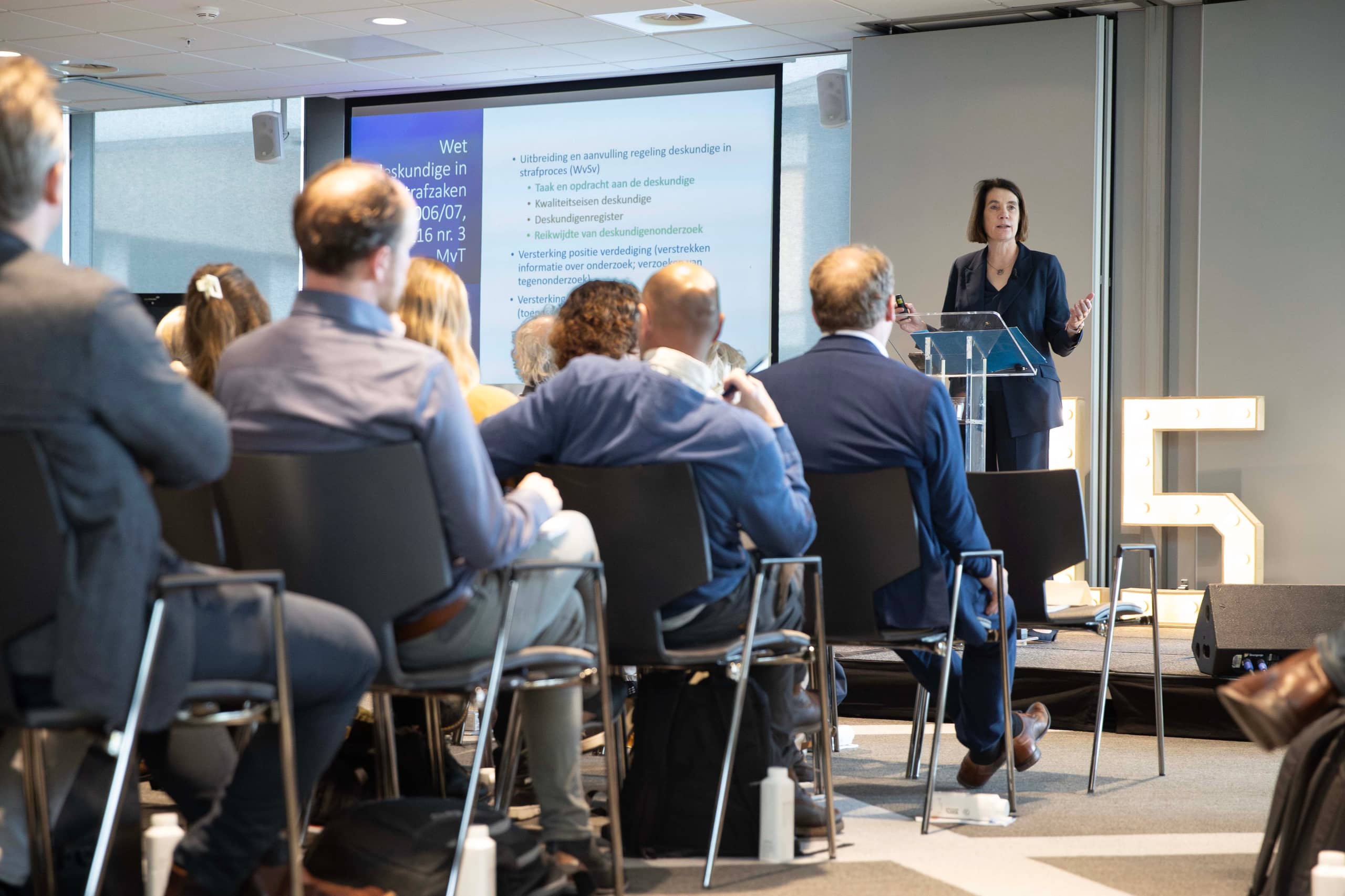
Image: © NRGD
The well-attended event featured thought-provoking contributions from Dineke de Groot (President of the Supreme Court of the Netherlands), Wilbert Paulissen (Deputy Chief of the Dutch Police), and Rolf Ypma (Data Scientist and Principal Scientist at the Netherlands Forensic Institute). Their perspectives offered a rich and varied look at the use of forensic expertise in criminal proceedings and the pivotal role of the NRGD.
The programme opened with remarks by Henk van de Heuvel, Chair of the NRGD Board, who expressed the organisation’s ambition to further develop its role as a platform for forensic expertise in the years ahead. “Through the NRGD network, we can facilitate, organise and inspire others to take the next steps. By connecting people, we can help advance this changing field. Not because we, as NRGD, hold the expertise ourselves, but because we know the experts who do.”
Comprehensive quality
As someone involved with the NRGD from its inception, Dineke de Groot reflected on the original ambition to ensure that the quality register would not be limited to criminal law alone. Although that ambition has not yet been fully realised, she stressed that this should not be a reason to abandon it. She and Van de Heuvel highlighted that the judiciary has long called for the expansion of a quality register to civil and administrative law. De Groot also emphasised the importance of improving access to (and use of) the register by the legal profession.
A human endeavour
In an accessible and engaging talk on Artificial Intelligence (AI), Rolf Ypma guided the audience through the world of data science. Alongside the technology’s vast potential, he highlighted its limitations and challenges. He used Large Language Models (LLMs) as an example: these systems must learn to interpret criminal jargon and urban slang accurately — a complex task. He also noted that AI is becoming increasingly capable of detecting deepfake imagery. Nonetheless, he stressed that human experts remain indispensable in interpreting visual material as part of forensic evidence.
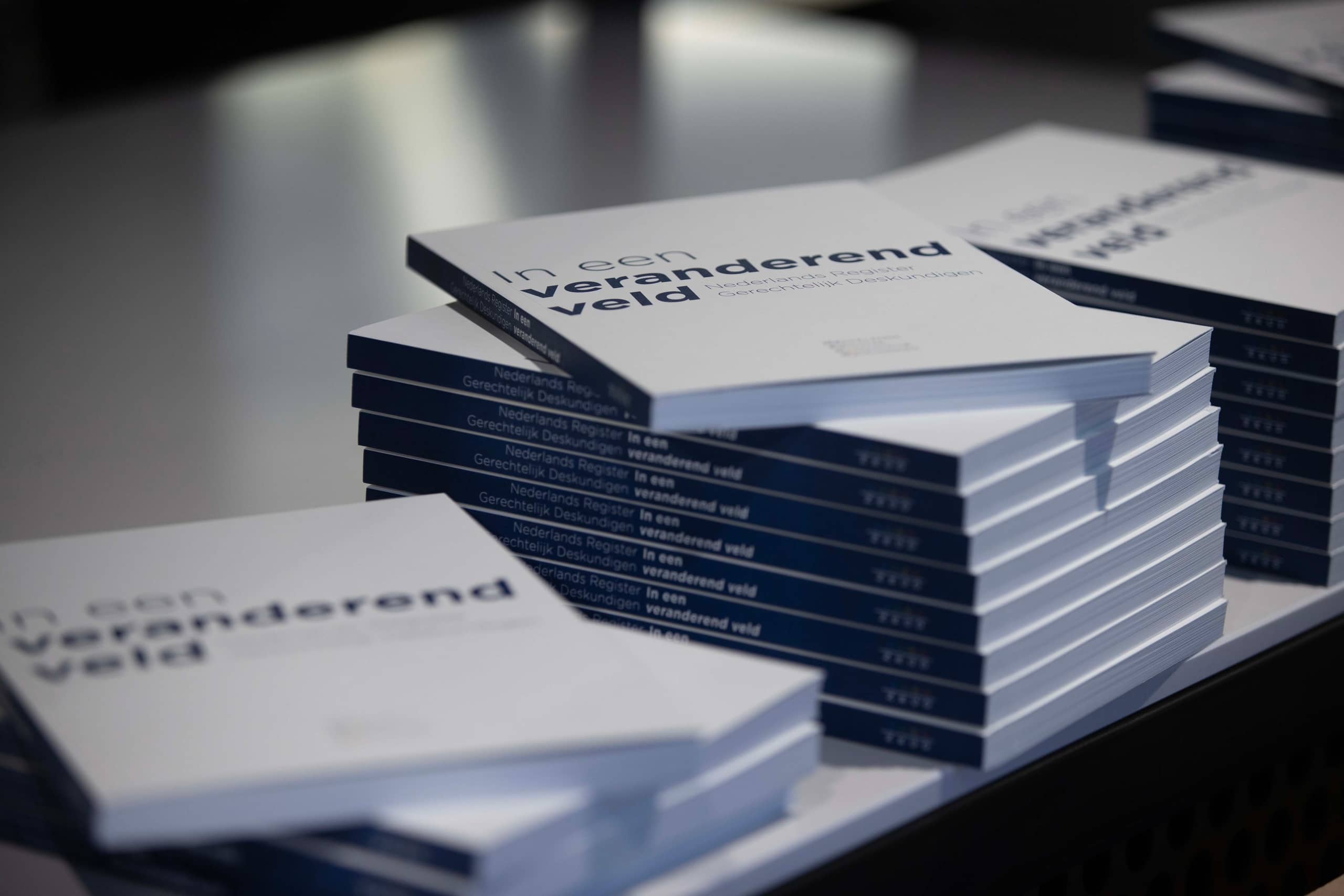
Image: © NRGD
Operating under pressure
Wilbert Paulissen addressed the tension between quality, quantity and speed in criminal investigations. From the crime scene onwards, digital investigation now plays a more critical role than ever before. At the same time, there is growing awareness of the importance of quality assurance within police operations.
However, the key challenge remains how to embed quality measures more firmly in policing, particularly under capacity constraints. Paulissen underlined that the police view the NRGD as an important partner in safeguarding the quality of expert witnesses and look forward to continued collaboration.
Marking the milestone
The symposium concluded with a short presentation of the book “In een veranderend veld” (In a Changing Field), which was published to commemorate the NRGD’s 15th anniversary. This is the second volume bringing together interviews with forensic experts, legal practitioners and policymakers.
All attendees received a printed copy as a token of appreciation for their presence. The digital version will be made available in week 43.